
The Best Hashimoto’s Diet for Beginners




If you’ve been diagnosed with Hashimoto’s and feel completely overwhelmed by food advice, you’re not alone. One person says cut gluten, another says cut carbs, someone else says go AIP… and suddenly it feels like everything is off-limits. That confusion often leads to food fear, extreme restriction, and burnout — none of which actually support healing.
This post is intentionally different! This guide is beginner-friendly, supportive, and realistic. By the end of this article, you’ll know exactly how to eat for Hashimoto’s without going extreme.
Why Diet Matters with Hashimoto’s
Hashimoto’s is an autoimmune condition, which means your immune system is already working overtime. Certain foods can either calm that inflammatory response or quietly add fuel to the fire. That’s why diet does matter — but not in the all-or-nothing way it’s often presented.
The right nutrition can help reduce immune triggers, support thyroid hormone conversion (especially T4 to T3), and improve energy, digestion, and blood sugar stability. When your body is better nourished, it simply has more capacity to function.
The Biggest Mistake Beginners Make
One of the most common mistakes beginners make is going too restrictive, too fast. After diagnosis, it’s easy to panic and start cutting foods left and right — gluten, dairy, sugar, carbs, nightshades — all at once. This often leads to under-eating, nutrient deficiencies, and even more stress on the body.
Another issue is removing foods without understanding why. When you don’t know what you’re testing or supporting, it becomes impossible to tell what’s actually helping. Many people also try to follow multiple protocols at the same time, which creates confusion and burnout instead of clarity
.
On top of that, blood sugar balance and stress are often overlooked. Skipping meals, eating too little, or constantly worrying about food can worsen fatigue and hormone disruption. With Hashimoto’s, a calmer, more intentional approach is far more supportive than extreme dieting.

The Best Hashimoto’s Diet for Beginners
Focus on Anti-Inflammatory Foundations
Instead of focusing on what to remove, start by building a solid foundation. Aim for protein at every meal to support energy and hormone function. Add fiber-rich vegetables for gut and immune support, and include healthy fats like olive oil, avocado, and fatty fish to support hormones and reduce inflammation. Prioritize mineral-rich whole foods — these nutrients are essential for thyroid function and are often overlooked.
Prioritize Blood Sugar Balance
Blood sugar crashes are a major driver of fatigue and brain fog with Hashimoto’s. A simple way to prevent this is to structure meals with protein + fat + carbohydrates. This combination keeps energy stable and reduces stress hormones. Skipping meals or eating too little may seem helpful, but it often backfires by increasing cortisol and worsening symptoms.
Reduce Common Triggers (Without Obsessing)
Many people with Hashimoto’s feel better reducing gluten, as it can aggravate inflammation and gut permeability. Excess sugar and ultra-processed foods can also worsen energy swings and inflammation. That said, food sensitivities are not forever rules — they’re tools. The goal is awareness and support, not lifelong restriction.
Foods to Focus On vs Foods to Limit
Foods That Tend to Support Hashimoto’s
Many people with Hashimoto’s feel best when their meals are built around high-quality proteins like fish, poultry, eggs, or legumes. Cooked vegetables are often easier to digest than raw ones and can be more supportive for gut health. Including anti-inflammatory fats such as olive oil, avocado, nuts, and seeds helps support hormones and steady energy. Easy-to-digest carbohydrates like rice, potatoes, fruit, or squash can also be helpful for thyroid and adrenal support.
Foods That May Worsen Symptoms for Some
Certain foods may worsen symptoms for some people with Hashimoto’s. Gluten is a common one, as it can increase inflammation for many. Excess sugar often contributes to energy crashes and inflammation, while highly processed foods tend to lack the nutrients your thyroid needs. Inflammatory oils found in many packaged foods may also be problematic. These aren’t universal rules — they’re patterns worth paying attention to.
If you’d like a deeper explanation of why certain foods support Hashimoto’s — and how to apply this in real life — I walk through it step by step in this video. I break down the biggest diet myths, what actually matters for thyroid health, and how to eat in a way that supports your energy without going extreme.
$7 Done-For-You Hashimoto's Meal Plan
If you’re tired of overthinking every meal and wondering whether you’re helping or hurting your thyroid, this is for you. I created a Hashimoto’s Diet Bundle to make eating with Hashimoto’s feel simple, clear, and doable.
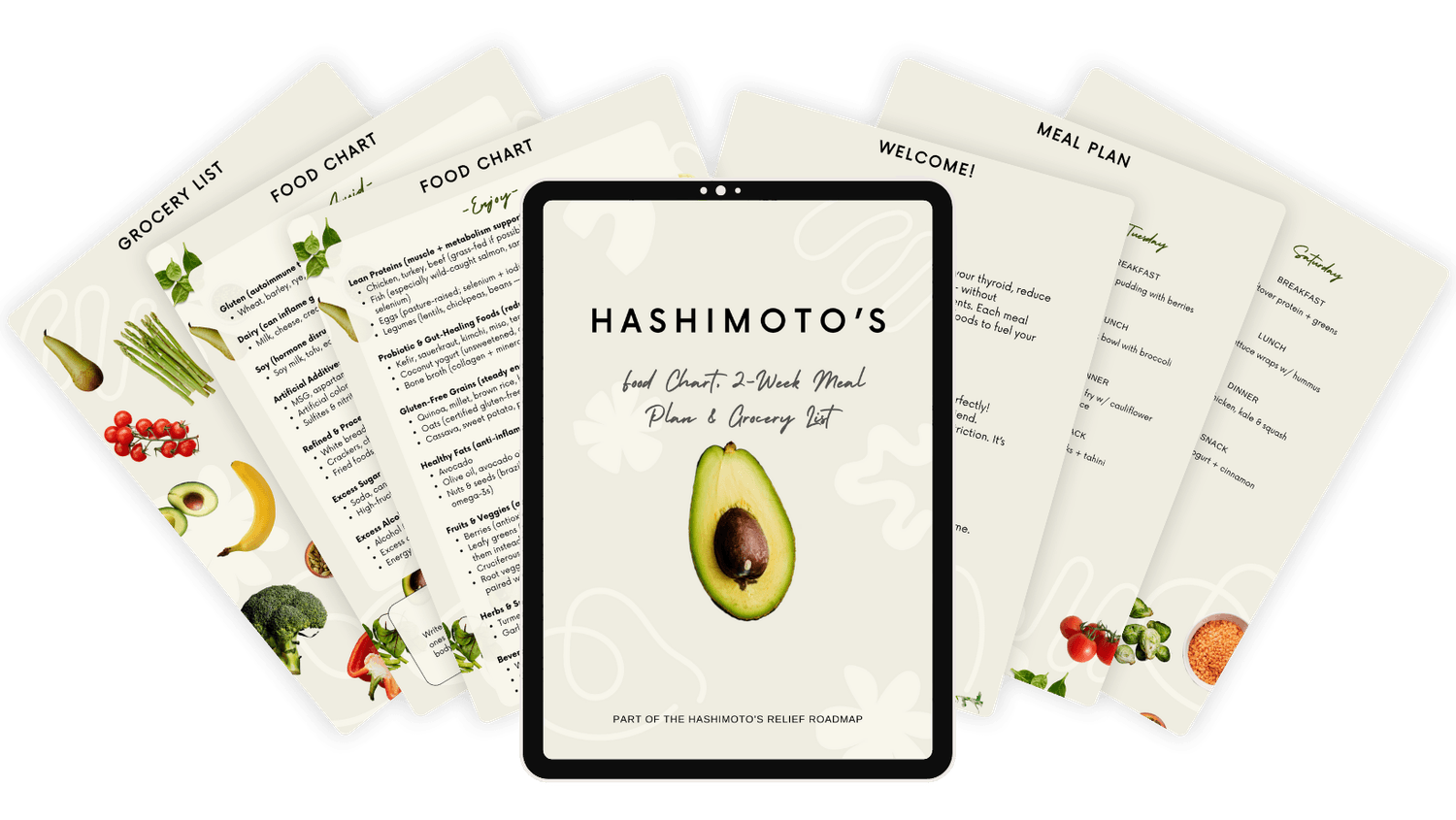
Inside the bundle, you’ll get a Hashimoto’s Food Chart, a 2-Week Meal Plan, and a Grocery List — all designed to reduce inflammation, support your energy, and remove daily decision fatigue. It’s intentionally beginner-friendly and sustainable, so you’re not jumping into anything extreme or overwhelming.
👉 Get the $7 Hashimoto’s Diet Bundle
Final Thoughts: You Don’t Need Extreme Dieting to Feel Better
If you’re just getting started, I want you to know this: you don’t need to diet harder, restrict more, or be perfect to support your thyroid. Hashimoto’s responds best to consistency, nourishment, and patience, not extremes.
Allow yourself to stay curious about how food makes you feel instead of fearful of getting it “wrong.” Small, supportive changes — made consistently — add up over time. Wherever you are right now is a perfectly fine place to start.
Take the next small step that feels manageable for you. That’s how real, sustainable healing begins.
Latest Posts
JOIN MY NEWSLETTER
Get wellness tips, exclusive offers, & recipes directly to your inbox regularly
© 2025-2026 All Rights Reserved
Content on this website is not considered medical advice.
Please see a physician before making any medical or lifestyle changes.
© 2025-2026 All Rights Reserved
Content on this website is not considered medical advice.
Please see a physician before making any medical or lifestyle changes.